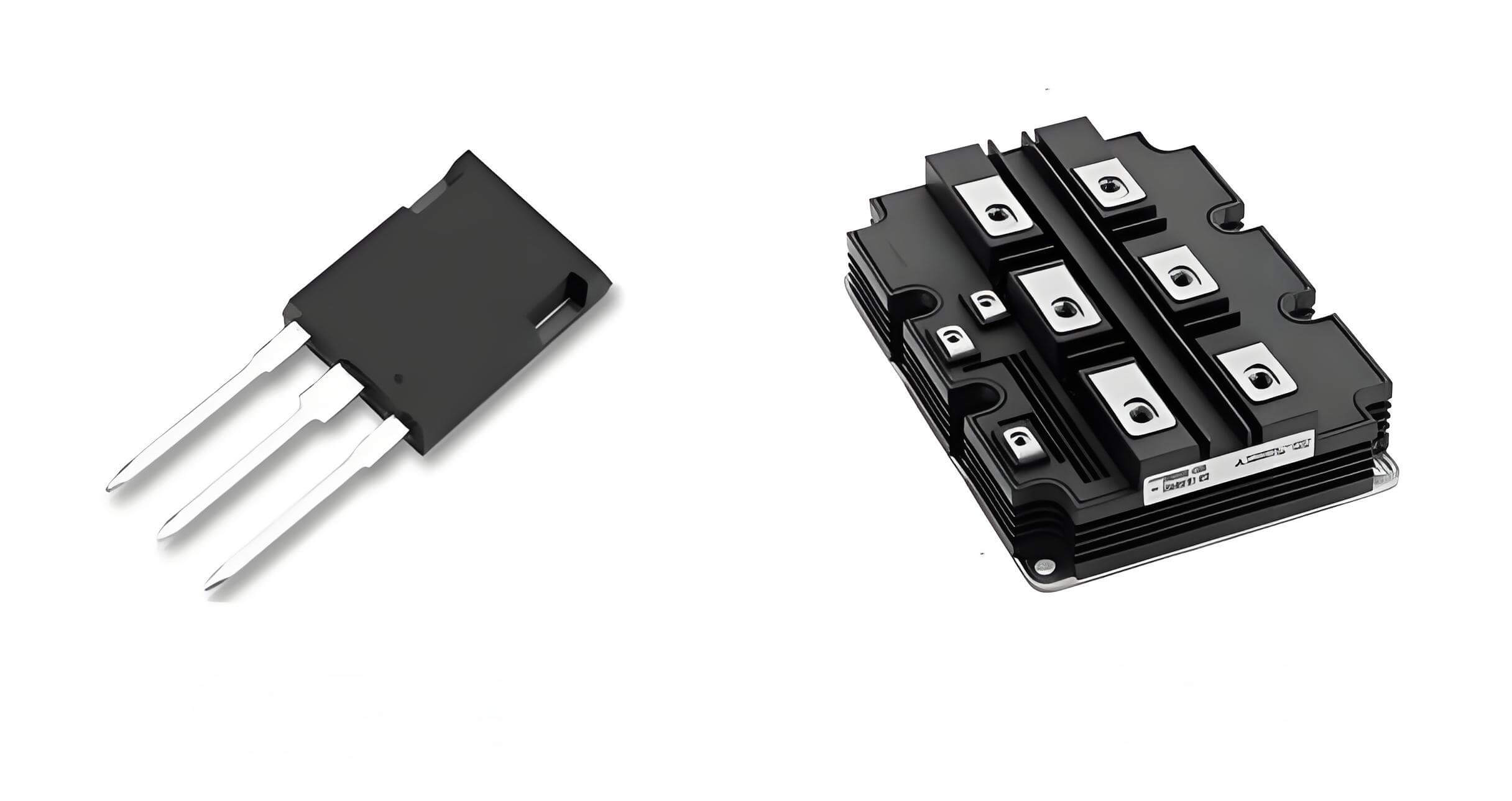
What is the difference between IGBT module and MOSFET?
The fundamental difference between structure and working principle:
1.MOSFET:
Pure field-effect devices belong to unipolar devices.
The conductivity depends only on the majority of charge carriers (N channel is electrons, P channel is holes).
When conducting, a conductive channel is formed under the action of gate voltage, and current flows from the drain to the source.
IGBT:
Composite equipment. It can be seen as a MOSFET that drives bipolar transistors.
Combine the gate voltage control of MOSFET with the low conduction voltage drop characteristics of bipolar transistor.
The conductive mechanism involves both majority carriers and minority carriers.
When conducting, the MOSFET part forms a channel, which serves as the base current of the bipolar transistor, causing the bipolar transistor to conduct and generate a strong conduction modulation effect, allowing large currents to pass through.
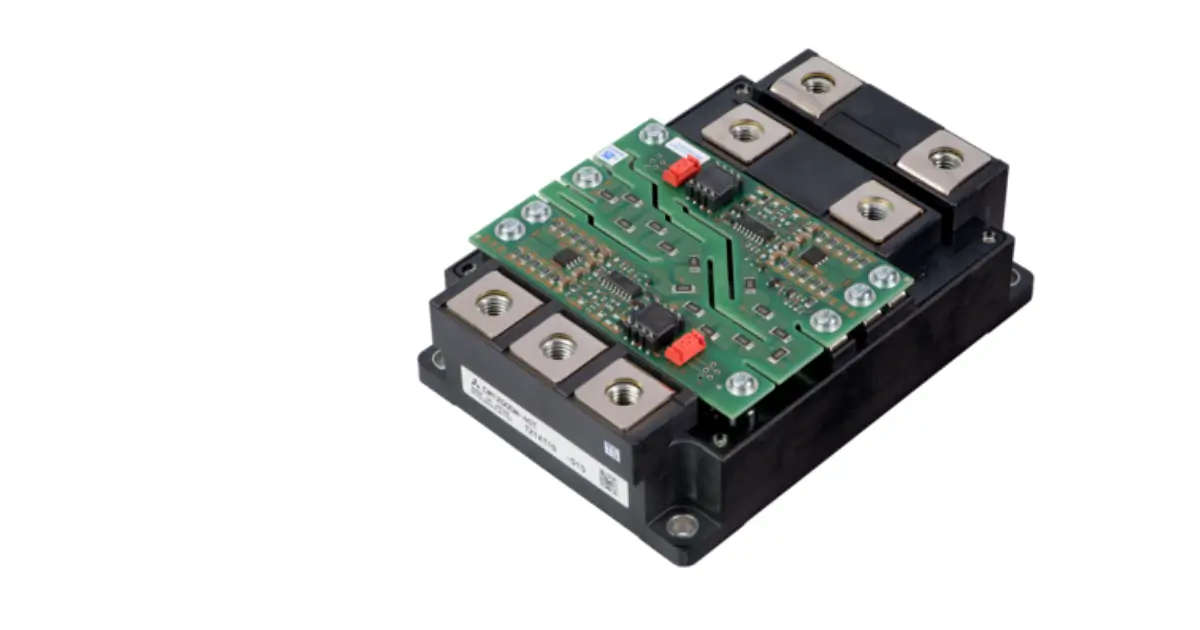
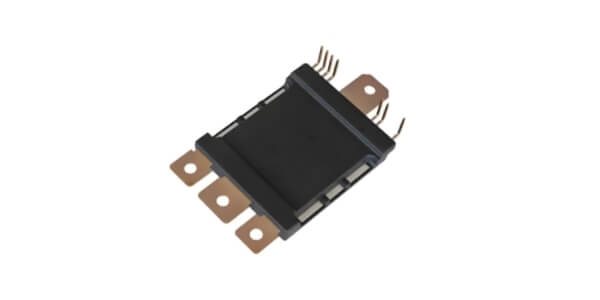
The IGBT module contains multiple IGBT chips (connected in parallel to improve current capability) and necessary anti parallel fast recovery diode chips.
Key performance differences:
2. Voltage and current capability:
MOSFET: Excellent performance at low voltage. However, the on resistance of high-voltage MOSFETs increases sharply with the increase of withstand voltage level, resulting in excessive conduction loss and low efficiency. Usually suitable for<250V (preferably<100V), low or medium current applications. High voltage MOSFETs (such as 900V) have high costs and low efficiency.
IGBT module: designed specifically for medium to high voltage and high current. At high voltage (>600V) and/or high current, its conduction voltage drop is much lower than that of high voltage MOSFETs, and its conduction loss advantage is obvious. The voltage range is usually 600V to 6500V or even higher, and the current can reach hundreds or even thousands of amperes.
Conduction loss:
3. MOSFET: It has extremely low conduction loss at low voltage and low current. But under high voltage or high current, due to the large on resistance, the loss increases sharply.
IGBT module: The conduction loss at high voltage and high current is significantly lower than that of MOSFETs at the same voltage and current levels. This is the main reason why IGBT replaces MOSFET in high-voltage and high-power fields. The conduction pressure drop is relatively fixed.
Switch loss and speed:
4. MOSFET: It has extremely fast switching speed (especially turn off speed) and very low switching loss. Very suitable for high-frequency switch applications (tens of kHz to MHz).
IGBT module: The switching speed is slower than MOSFET (especially the tail current when turned off), resulting in higher switching losses than MOSFET. The operating frequency is usually limited to a few tens of kHz (20kHz-50kHz is common, and new models can reach 100kHz+). The encapsulation structure of modules can also introduce certain parasitic parameters that affect speed.
Input characteristics and driving factors:
5. Both are voltage controlled devices (gate driven) with relatively simple driving circuits and lower driving power (compared to current driven devices such as thyristors and BJTs). This is their common huge advantage.
Temperature characteristics:
MOSFET: The on resistance has a positive temperature coefficient (Rds (on) increases with temperature). This is beneficial for automatic current sharing of parallel devices.
IGBT module: The conduction voltage drop has a slight negative temperature coefficient (Vce (sat) decreases slightly with increasing temperature). When used in parallel, more refined design (such as matching, driving, layout) is required to ensure current sharing.
Anti short circuit capability:
IGBT typically has stronger short-circuit withstand capability (over a period of time) than MOSFET, which is important in certain industrial drive applications

6. Typical differences in application scenarios:
MOSFET dominant fields (low voltage, high frequency, high efficiency):
Switching mode power supply (SMPS): computer power supply, mobile phone charger, adapter, etc. (input voltage usually<600V DC).
DC-DC converter.
Low voltage motor drive (such as drones, electric tools).
Synchronous rectification (utilizing its low conduction voltage drop and fast switching characteristics).
High frequency induction heating (low power).
Automotive low-voltage system (such as 12V/48V domain).
IGBT module dominant fields (medium high voltage, high power, medium low frequency):
Industrial motor frequency converter (drives 380V/480V/690V AC motors).
The main drive inverter for electric/hybrid vehicles (battery voltage typically 300V-800V DC).
New energy generation: photovoltaic inverters (especially centralized, high-power string type), wind power converters.
High power switch power supply, welding machine power supply.
Uninterruptible power supply (medium to high power UPS).
Rail transit traction inverter.
High voltage direct current transmission.
Induction heating (medium to high power).
7. Additional explanation about “module”:
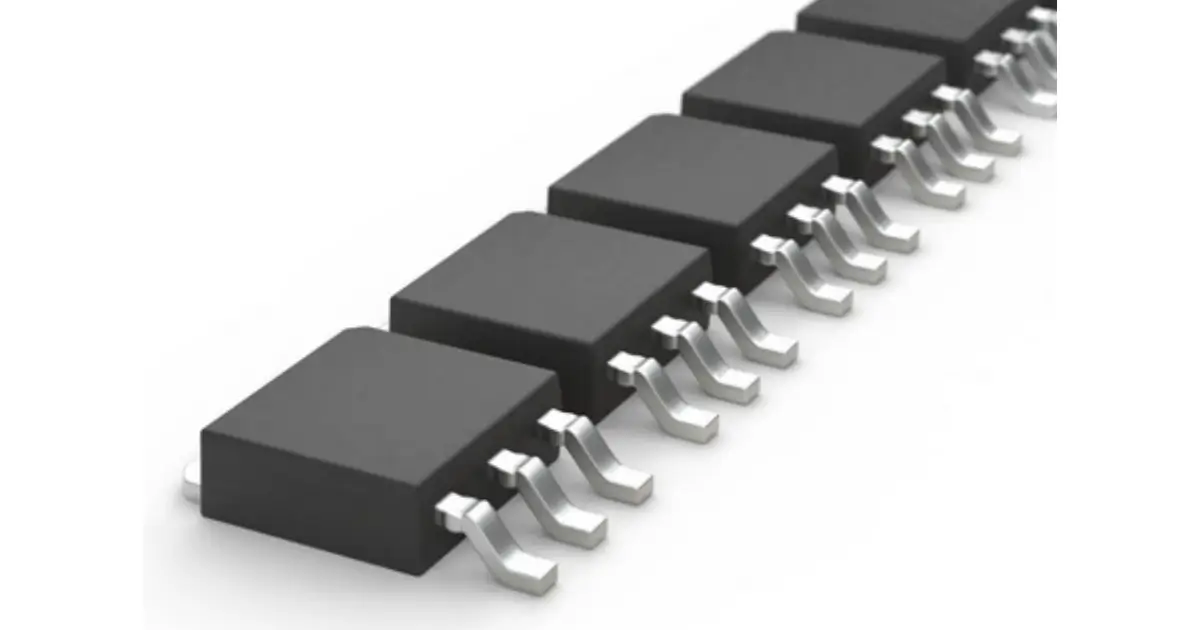
Although MOSFETs can also be made into modules (MOSFET modules), their purpose and structure are similar to IGBT modules: parallel chips to increase current, integrated diodes, optimized heat dissipation, and insulation packaging.
The key difference lies in whether the core switch chip inside the module is MOSFET or IGBT. MOSFET modules are mainly used in applications that require high current but relatively low voltage (such as high current DC-DC, servo driver output stages), while IGBT modules are used in high-voltage and high current scenarios.
Due to its high voltage and high current positioning, modular packaging is almost inevitable for IGBT modules, while low-power MOSFETs are often used in the form of discrete devices.
Summary:
Choose MOSFET: When you need low voltage, high frequency switching, and ultra-high efficiency (especially when the voltage is below 250V). At low voltage, its conduction and switching losses are extremely low.
Choose IGBT module: When you need to handle medium to high voltage and high current (usually voltage>600V). At this point, its conduction loss is much lower than that of high-voltage MOSFETs. Although the switching speed is slower, it has higher overall efficiency and better cost-effectiveness in its applicable mid to low frequency range.
Technological development trend:
Wide bandgap semiconductor devices such as SiC MOSFETs and GaN HEMTs are rapidly developing, combining the high-speed switching and low driving power of MOSFETs with the high voltage and low conduction loss advantages (or even better) of IGBTs, with operating frequencies much higher than IGBTs. They are gradually eroding the market share of traditional silicon-based IGBT modules in high-end applications such as high-end electric vehicle main drives and ultra-high efficiency photovoltaic inverters, but currently cost remains the main limiting factor. Silicon based IGBT modules will continue to dominate in the medium to high voltage and high-power fields in the foreseeable future.