
A Detailed Technical Explanation of Press-Fit Fisheye Terminal Technology: Principles, Advantages, and Applications
In the field of IGBT modules and other high-reliability electronics, a technology called Press-Fit is gradually replacing traditional soldering as the mainstream solution for connecting terminals and Printed Circuit Boards (PCBs). Known domestically in China as the “Fisheye Terminal” due to its core connecting structure resembling a fish’s eye, this technology will be comprehensively analyzed in this article from multiple dimensions including its definition, principle, advantages, classification, and applications.
-
What is a Fisheye Terminal?
Press-Fit, directly translated as “compression fitting,” is a cold-press connection technology that achieves electrical connection through mechanical interference. It abandons traditional solder by pressing a specially designed elastic pin into a plated through-hole (PTH) in the PCB. The key deformation zone of this elastic pin resembles a fisheye, hence the name “Fisheye Terminal.”
Core Technical Principles:
- Elastic Deformation and Interference Fit: The diameter of the press-fit hole on the PCB is precisely controlled to be slightly smaller than the outer diameter of the fisheye terminal (typically by 0.05-0.1mm). When the terminal is pressed in, its “fisheye” structure undergoes elastic or plastic deformation.
- Generates Sustained Retention Force: The deformed terminal acts like a spring, exerting a large and persistent normal force (retention force) against the PCB hole wall.
- Forms a Reliable Connection: This pressure ensures a low-resistance, highly reliable electrical connection and a secure mechanical fixation between the terminal and the hole wall, achieving circuit connectivity without soldering.
-
Why Develop the Fisheye Terminal? — The Inevitable Trend Replacing Soldering
Inherent shortcomings of traditional soldering drove the need for better connection technologies:
Shortcomings of Traditional Soldering:
Poor Reliability: Solder has weak environmental resistance, oxidizes easily, and loses strength over time due to stress relaxation, potentially leading to cold solder joints and fatigue fractures.
Safety Risks: Tin atoms can react with halogen elements, forming “tin whiskers” or “electrical bridges” on the PCB surface, causing short-circuit failures.
Environmental and Health Concerns: Early lead-containing solder caused environmental pollution, while lead-free solder requires more stringent process control.
Complex Process, High Cost: The soldering process involves multiple steps like preheating, solder paste application, and reflow, making process control complex and increasing time and equipment costs.
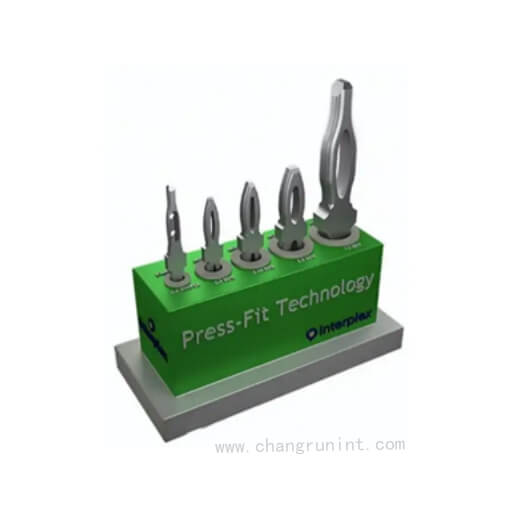
Advantages of Fisheye Terminals:
High Reliability and Long Lifespan: Eliminates solder joint fatigue issues; resistant to high temperatures (up to 125°C and above) and vibration; connection failure rates can be up to 100 times lower compared to soldering.
Environmentally Friendly: Completely eliminates the need for solder, complying with RoHS and other environmental regulations.
High Production Efficiency: Eliminates soldering steps, simplifies the process, supports full automation, and significantly reduces assembly time and cost.
Excellent Repairability: Press-fit terminals can often be removed non-destructively or with minimal damage, facilitating the repair of faulty modules and component reuse.
Its Disadvantages and Challenges:
Requires extremely high precision in mold manufacturing. Simultaneously, it imposes stricter requirements on PCB hole diameter tolerance (typically needing to be controlled within ±0.05mm), as well as the control of press-fit equipment and process parameters.
-
Classification and Composition of Fisheye Terminals
- Classification by Material Thickness:
0.4mm, 0.6mm: Primarily used for Signal PINS transmitting signals.
0.8mm, 1.2mm: Primarily used for Power PINS carrying high currents.
- Classification by Structure Type:
Solid PIN: Robust structure, capable of carrying higher currents.
Hollow PIN: More elastic, easier to control press-fit force, more widely used.
- Materials and Plating:
Base Material: Copper alloys with good elasticity and conductivity are often used, such as phosphor bronze, beryllium copper, copper-nickel-silicon, brass, etc.
Plating: Typically a combination of “nickel underplating + surface precious metal” is used. The nickel underplate prevents diffusion of the base material, while surface layers like gold, silver, tin, palladium alloy, etc., provide excellent conductivity and oxidation resistance.
-
Typical Application Areas
Thanks to their high reliability, fisheye terminals have become the preferred connection solution in the following fields:
Automotive Electronics: Especially in EV IGBT modules (motor controllers), onboard sensors, and ECUs, where their resistance to vibration and high temperatures is crucial.
Energy and Industrial Equipment: Scenarios requiring high power and high fatigue strength, such as photovoltaic inverters, energy storage systems, and industrial frequency converters.
Communications and Computing: High-speed data connectors in 5G base stations, server backplanes, etc. Press-fit technology can reduce signal loss and improve signal integrity.

-
Technical Specifications and PCB Requirements
To ensure press-fit quality, stringent industry standards exist:
Major Standards: Examples include Bosch’s `1279927296`, Continental’s `CQR40453019`, and the International Electrotechnical Commission’s `IEC 60352-5`.
Key PCB Requirements:
Hole Diameter Tolerance: Must be strictly controlled, generally ±0.05mm.
Hole Copper Thickness: Typically required to be ≥20μm (1oz), ensuring sufficient mechanical strength and current-carrying capacity.
Board Thickness: Commonly found on thicker boards above 1.0mm to provide adequate support.
-
Innovation and Outlook
As mentioned in the described utility model patent, the industry continues to optimize the structure of fisheye terminals. For example, by designing “buffer zones” and “support zones,” combined with multiple connecting rods and bumps to form a “dual support force,” the aim is to extend the retention time of the terminal’s elasticity, thereby further enhancing its service life and stability.
In summary, Press-Fit fisheye terminal technology, as an advanced solderless connection solution, is playing an increasingly important role in high-end manufacturing sectors like automotive, energy, and communications. Its exceptional reliability, environmental friendliness, and production efficiency mark a significant evolution in electronic connection technology.